dsh-interrupt-button
Run the following command in DeepSeek Harness:
dsh plugin install guo-ziao/dsh-interrupt-button
Paste the following prompt into your AI chat to install this plugin:
You can install this plugin in DeepSeek Harness by running the command 'dsh plugin install guo-ziao/dsh-interrupt-button', or visit the GitHub repository https://github.com/guo-ziao/dsh-interrupt-button for more details.
About this plugin
When using DeepSeek Harness for agent workflows, users often need to redirect tasks midway, but traditional interruption methods may introduce simulated user messages that disrupt transcript coherence. The dsh-interrupt-button plugin solves this by adding a prominent green button beside the send box, offering an elegant one-click silent interruption: it halts the agent, summarizes progress, and prompts the user for new requirements, enabling seamless task switching and integration.
The plugin's core strength lies in its "strong pause" mechanism—it not only aborts the agent's active turn and background jobs but also interrupts child agents and disarms automatic goals, while preserving queued messages to prevent data loss. The agent then replies with a concise summary as an assistant message, keeping transcripts clear. Users can also customize the interrupt prompt to tailor instructions per scenario, and the theme-aware dialog enhances visual consistency.
Whether you are a developer, researcher, or everyday user relying on DeepSeek Harness for complex tasks, this plugin empowers you to control agent workflows with greater flexibility. It is ideal for scenarios requiring frequent instruction adjustments, multi-path task exploration, or managing long-running agents, making interactions more efficient and manageable.
Use Cases
- Silently interrupt a running agent and get a progress summary
- Customize interrupt prompts to suit different task needs
- Flexibly redirect workflows in long-running agents
Best For
- Developers who need to frequently adjust agent tasks
- Researchers conducting multi-turn interaction experiments
- Everyday users managing complex workflows
Related Plugins
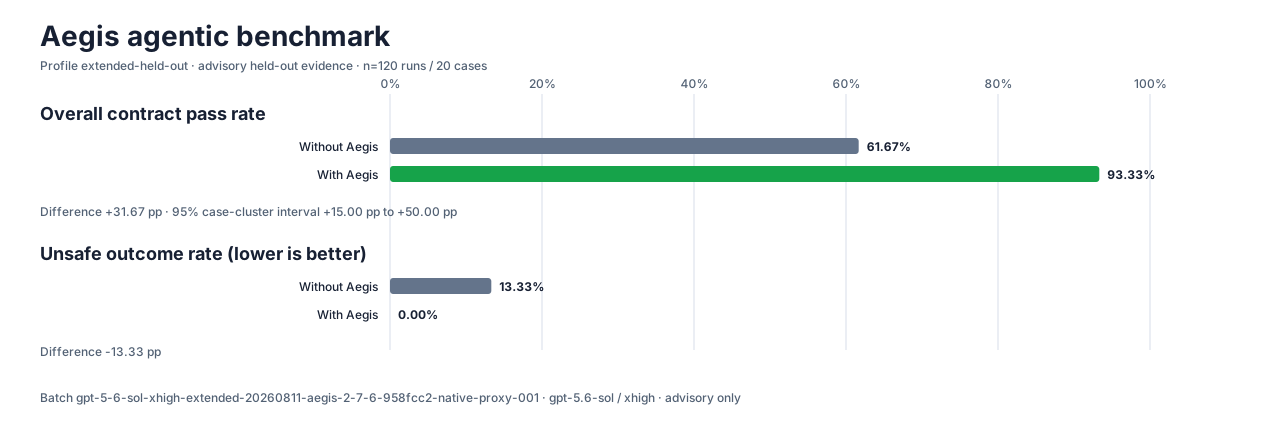
A method pack that makes AI coding agents plan against your real baseline, prove completion with fresh evidence, and reduce reworks and unsafe changes.
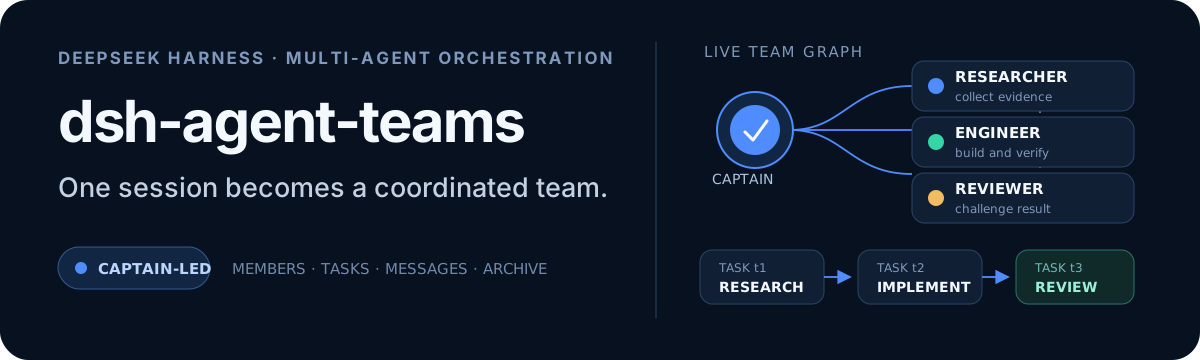
Turns the DeepSeek Harness session into a captain that builds a durable sub-agent team, splits goals into dependency-aware tasks, and coordinates work via direct messages and a live Web UI.
Gives coding agents design judgment, letting Claude Code, Cursor, and 70+ agents generate and iterate high-quality UI, presentations, and graphics right from the terminal.
Run the Pi ecosystem's plugins on DeepSeek Harness, unmodified, via a compatibility layer that implements Pi's public extension ABI on DSH's native services.